Kjerag Hotel

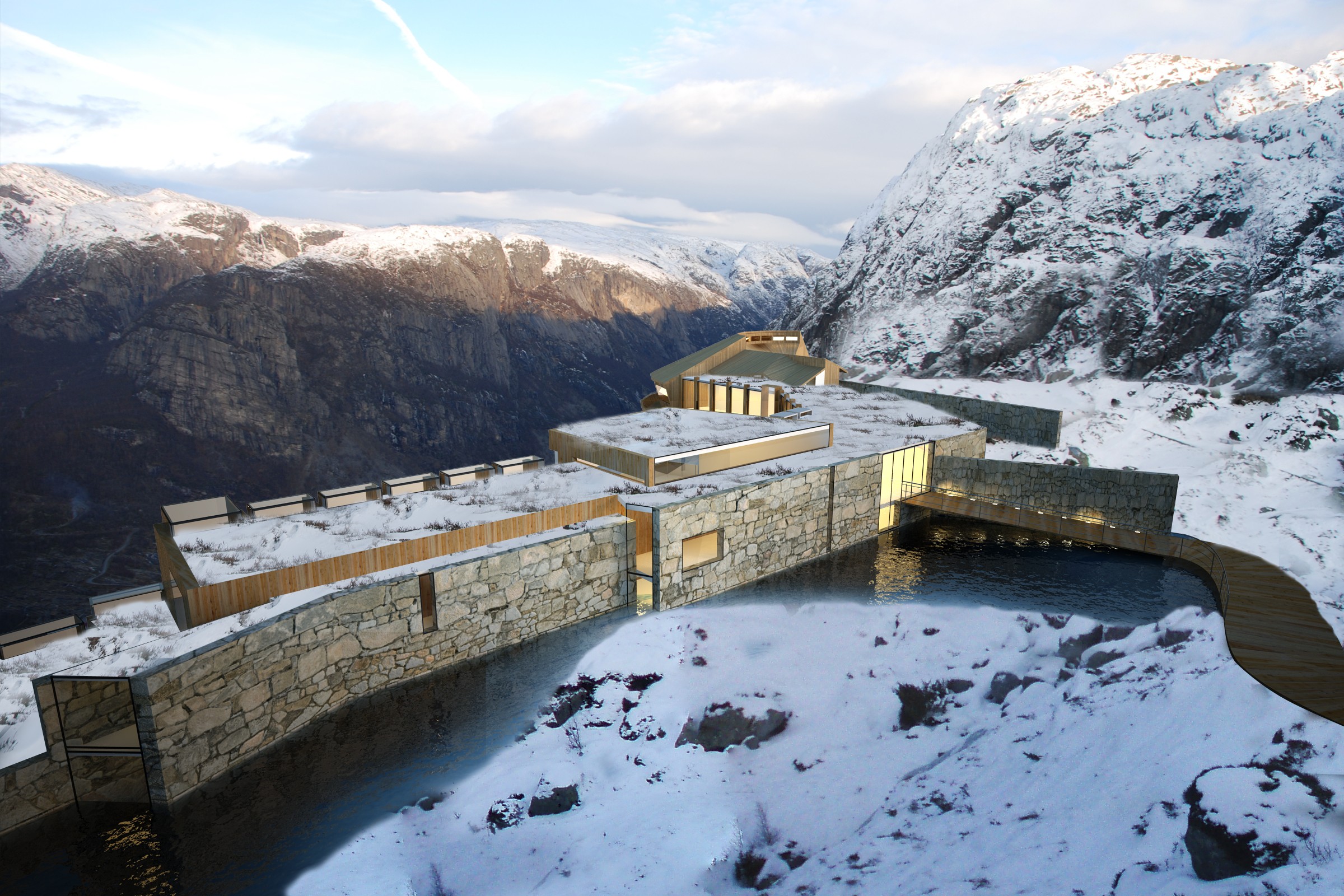
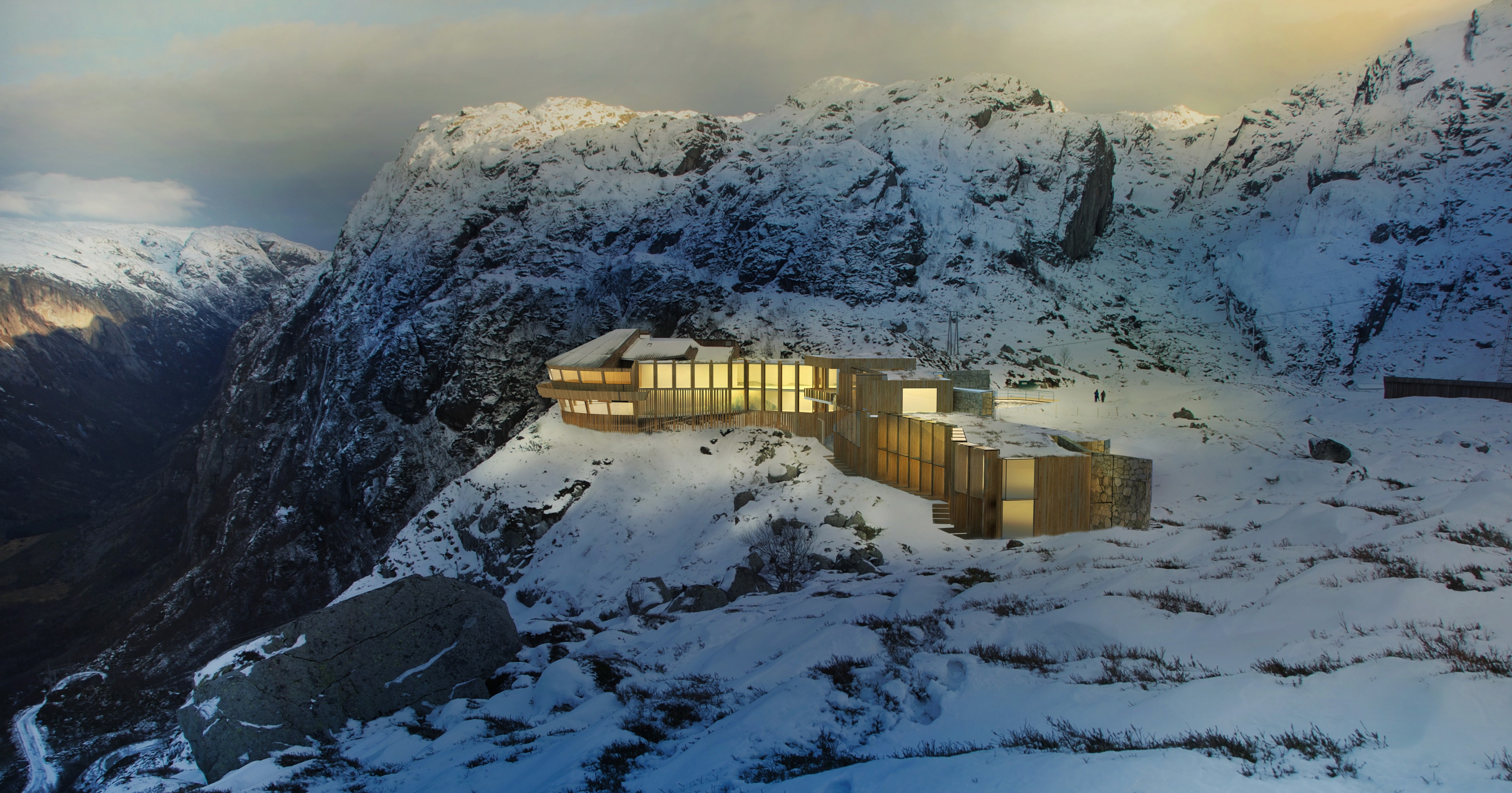
Kjerag Hotel is a panoramic destination hotel positioned 640 metres above Lysefjorden within Norway’s dramatic mountain landscape. Embedded in terrain shaped by glaciers and moraines, the architecture follows the contours of the site, framing expansive views while creating shelter, calm, and a close connection to nature.

Kjerag Hotel is a panoramic destination hotel positioned 640 metres above Lysefjorden within Norway’s dramatic mountain landscape. Embedded in terrain shaped by glaciers and moraines, the architecture follows the contours of the site, framing expansive views while creating shelter, calm, and a close connection to nature.

Location
Lysefjorden, Norway
Status
Design Proposal
Typology
Hospitality
Hospitality
All
All
Size
1800 m2
Year
2010
Client
Private
Kjerag Hotel is conceived as a new destination within the Lysefjord region, supporting year-round tourism connected to hiking, climbing, skiing, conferences and nature-based experiences. Positioned at Øygardstølen, a former mountain pasture on the edge of a dramatic plateau above Lysefjorden, the hotel occupies a threshold where open highland terrain suddenly drops towards the fjord below. The location offers expansive views across the landscape and forms the basis of the architectural concept.

The project extends an existing mountain restaurant and introduces approximately forty hotel rooms, conference facilities, a sky bar and shared amenities. All rooms are oriented toward the fjord and designed around panoramic views, allowing the surrounding landscape to become an integral part of the guest experience. Large windows and recessed seating niches frame the scenery and reinforce the relationship between interior and environment.

Kjerag Hotel is conceived as a new destination within the Lysefjord region, supporting year-round tourism connected to hiking, climbing, skiing, conferences and nature-based experiences. Positioned at Øygardstølen, a former mountain pasture on the edge of a dramatic plateau above Lysefjorden, the hotel occupies a threshold where open highland terrain suddenly drops towards the fjord below. The location offers expansive views across the landscape and forms the basis of the architectural concept.

The project extends an existing mountain restaurant and introduces approximately forty hotel rooms, conference facilities, a sky bar and shared amenities. All rooms are oriented toward the fjord and designed around panoramic views, allowing the surrounding landscape to become an integral part of the guest experience. Large windows and recessed seating niches frame the scenery and reinforce the relationship between interior and environment.

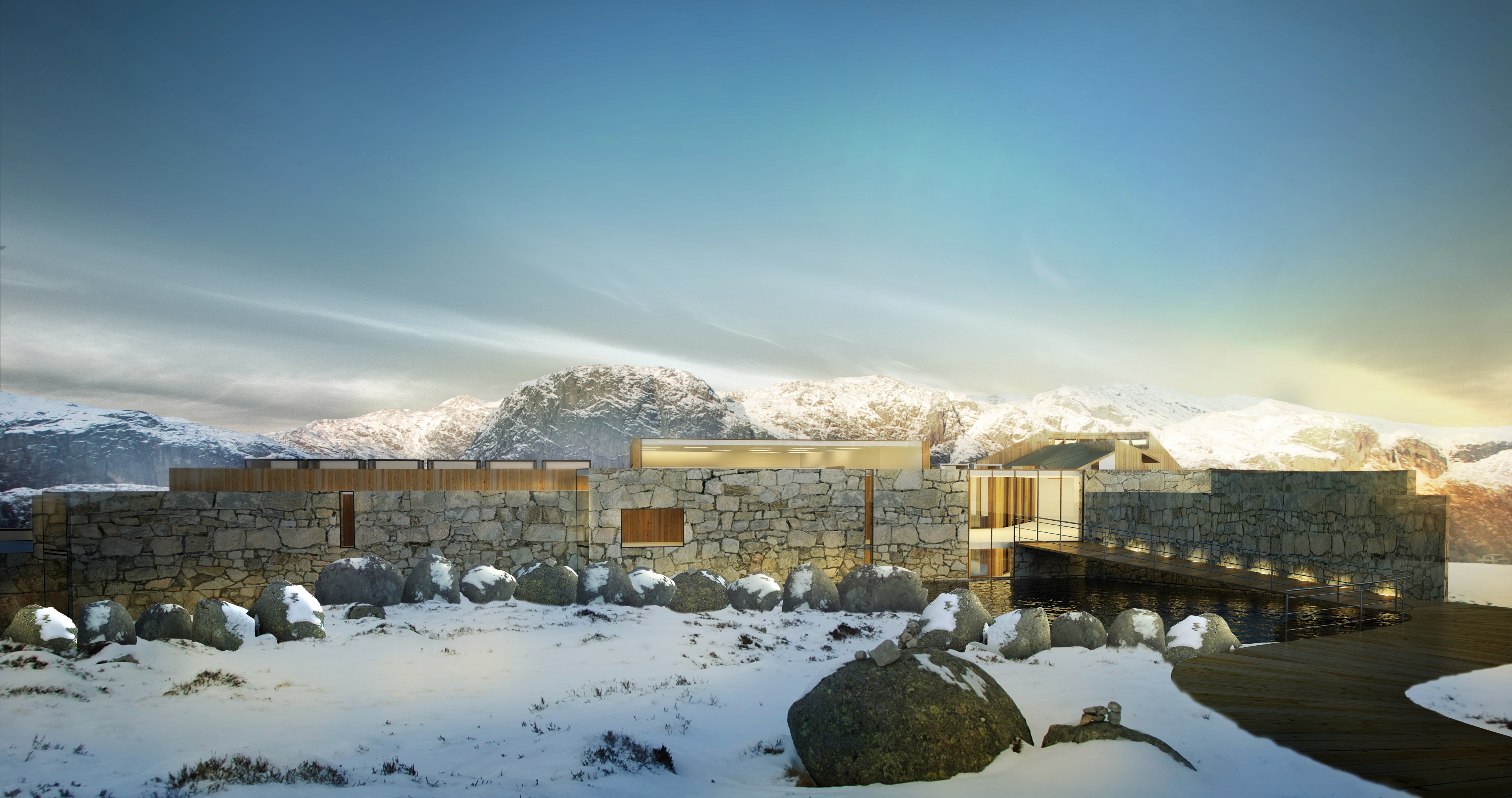
The design is rooted in the idea of Trollgarden, the ancient moraine formations and stone ridges that characterize the site. The building follows the terrain as a linear structure, forming a protective wall toward the south while opening fully toward the fjord. Guests move from arrival areas through sheltered stone passages before emerging at the cliff edge, where the landscape unfolds. This transition from activity to stillness is central to the experience. Natural materials including stone, timber, moss, water and grass roofs strengthen the connection between architecture and place.

Environmental strategies include energy recovery systems, greywater reuse, local groundwater supply and on-site wastewater treatment, supporting an ambition for an integrated ecological approach.

The design is rooted in the idea of Trollgarden, the ancient moraine formations and stone ridges that characterize the site. The building follows the terrain as a linear structure, forming a protective wall toward the south while opening fully toward the fjord. Guests move from arrival areas through sheltered stone passages before emerging at the cliff edge, where the landscape unfolds. This transition from activity to stillness is central to the experience. Natural materials including stone, timber, moss, water and grass roofs strengthen the connection between architecture and place.

Environmental strategies include energy recovery systems, greywater reuse, local groundwater supply and on-site wastewater treatment, supporting an ambition for an integrated ecological approach.

Credits

Architecture, Interior Design, Landscape Design: Basalt Architects

Project Architect: Sigríður Sigþórsdóttir

Design Team: Guðjón Kjartansson

Collaborators

Engineering: Asplan Viak