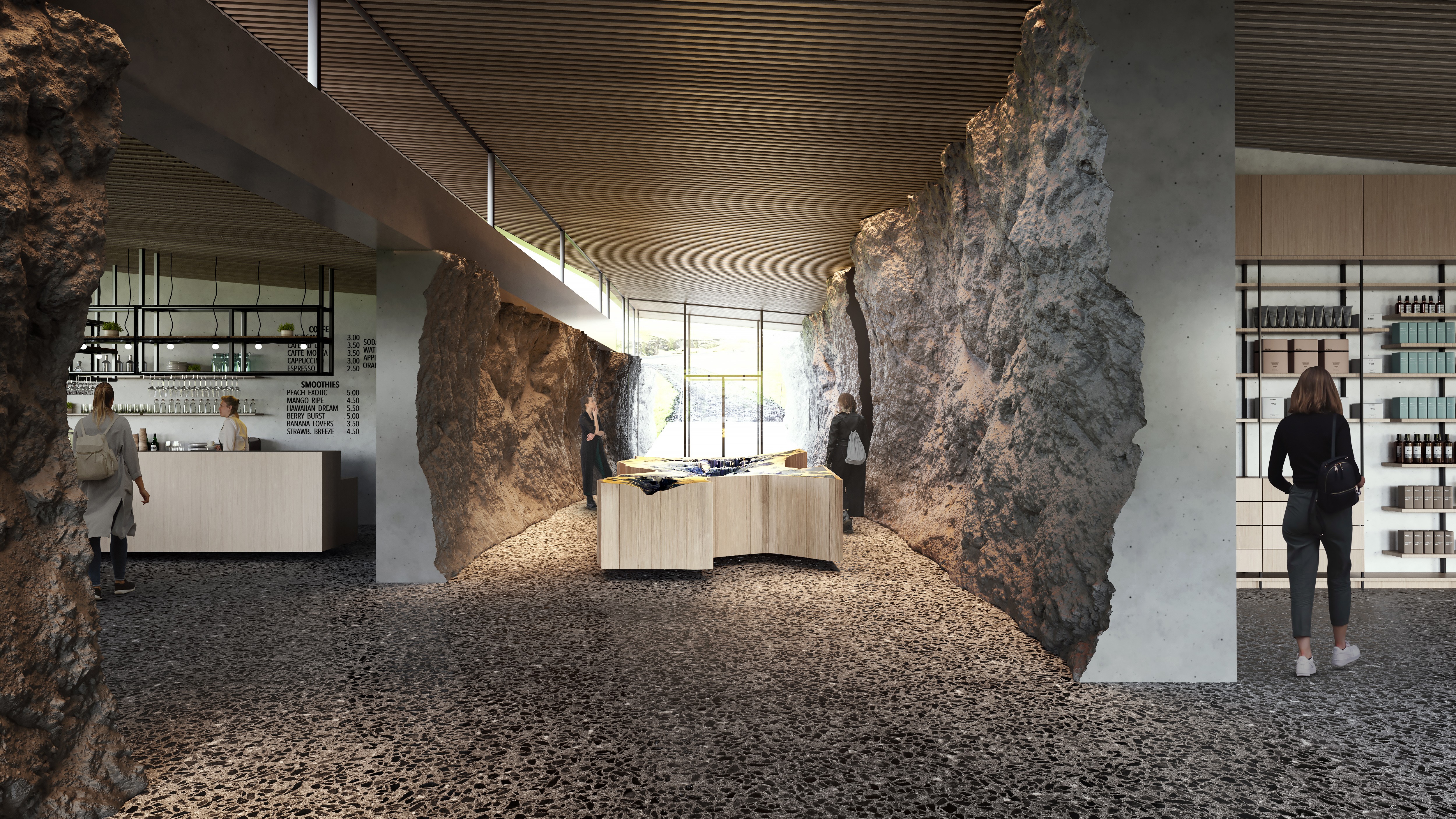
Fjaðrárgljúfur Visitor Centre
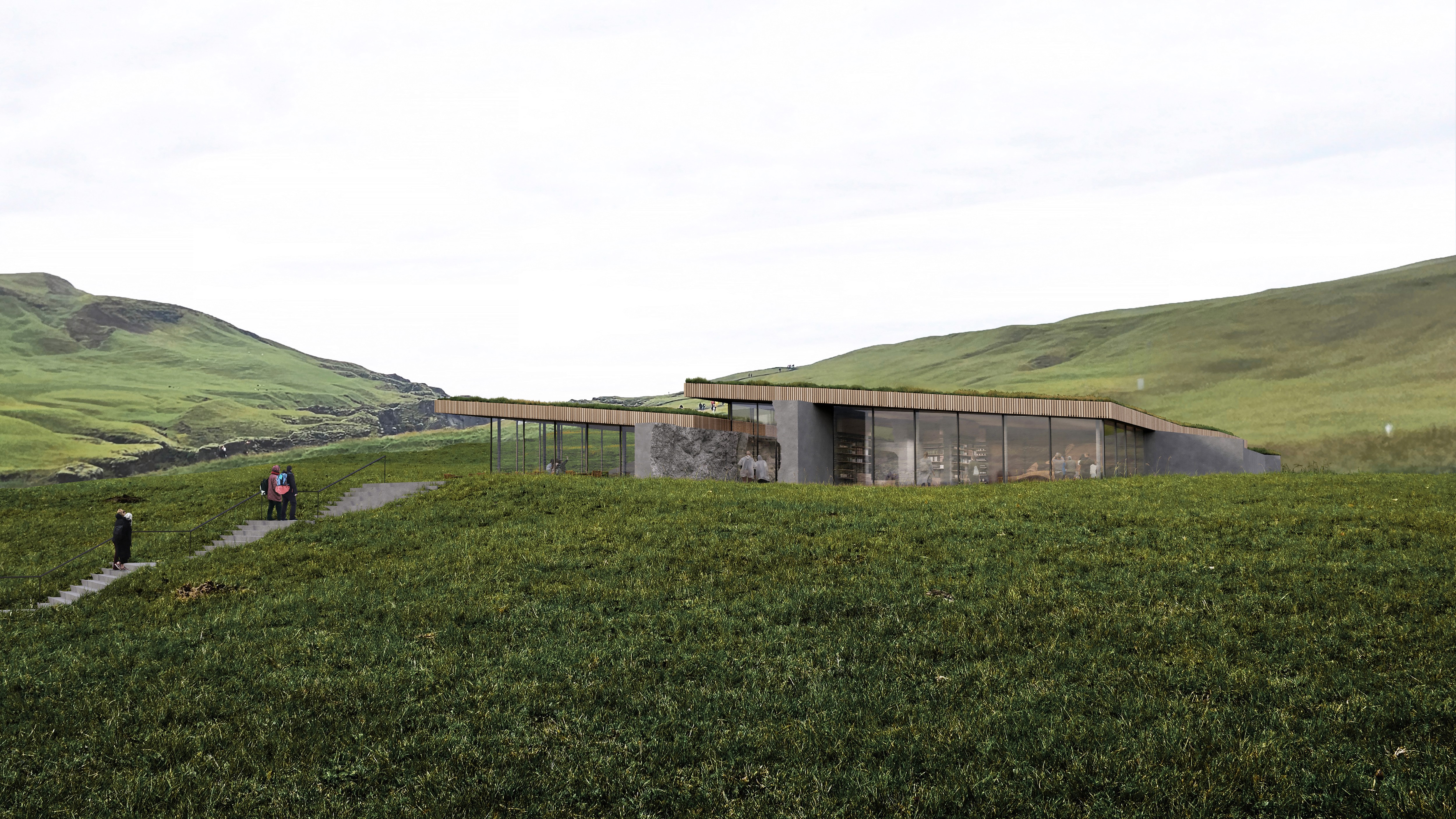
Fjaðrárgljúfur Visitor Center is conceived as an extension of the canyon, where architecture, landscape, and exhibition merge. Rooted in the site’s geology and shaped by time and water, the project translates natural processes into spatial experience through movement, material, and light, fostering a deeper connection between visitors and place.

Location
Fjaðrárgljúfur, Iceland
Status
Ongoing
Typology
Culture
Culture
All
All
Size
1000 m2
Year
2028
Client
Private
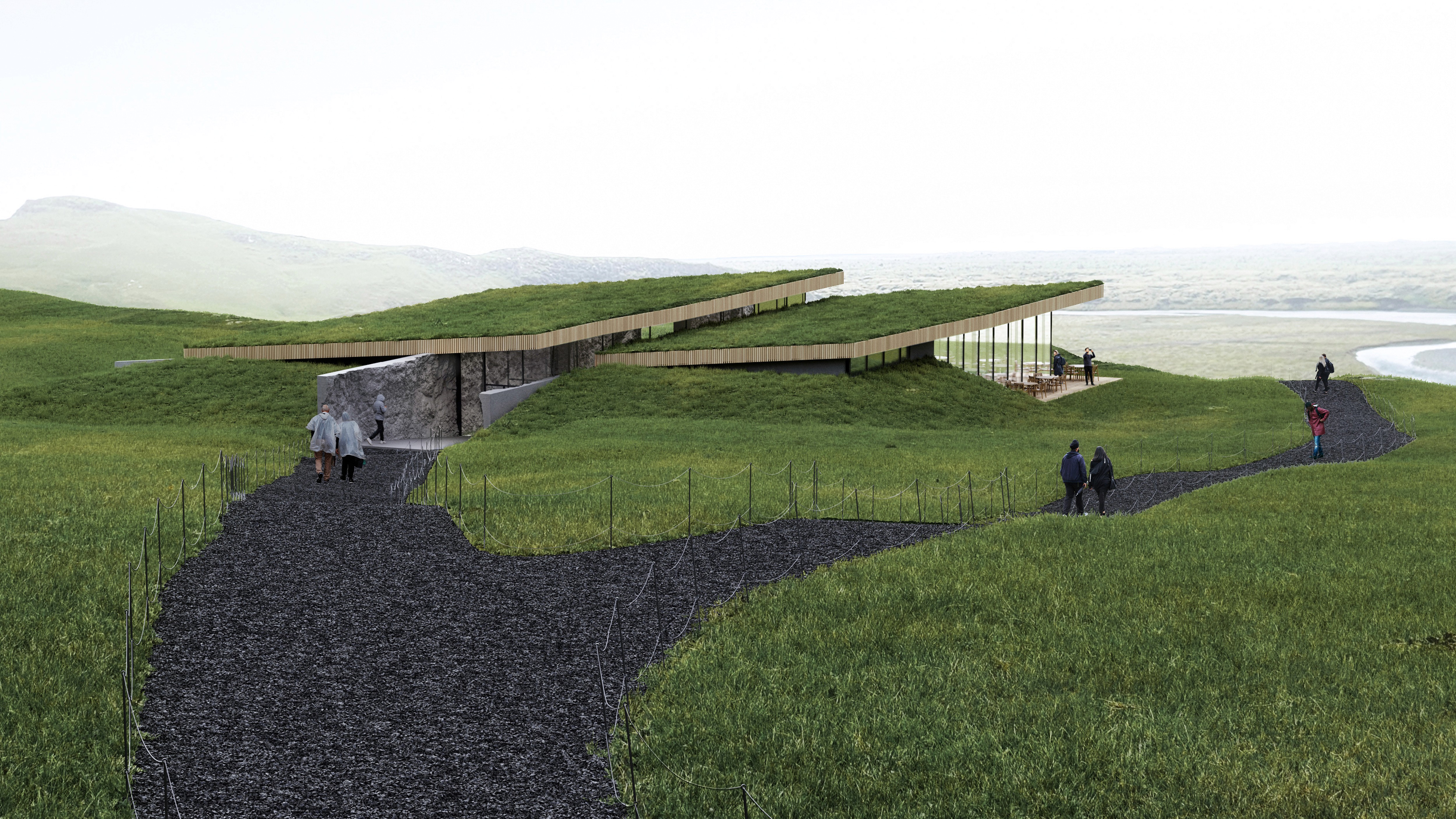
Fjaðrárgljúfur Visitor Center is designed as an integrated destination that frames and deepens the experience of the canyon. It functions both as a point of arrival and orientation and as an immersive environment that prepares visitors to engage with the landscape beyond.

Set within the fragile terrain of South Iceland, the project responds directly to its context. The canyon, carved over 9,000 years by the Fjaðrá river through palagonite rock, is a dynamic formation shaped by erosion and time. The building is carefully embedded in the landscape, preserving the character and integrity of the site while allowing architecture and terrain to merge.

Fjaðrárgljúfur Visitor Center is designed as an integrated destination that frames and deepens the experience of the canyon. It functions both as a point of arrival and orientation and as an immersive environment that prepares visitors to engage with the landscape beyond.

Set within the fragile terrain of South Iceland, the project responds directly to its context. The canyon, carved over 9,000 years by the Fjaðrá river through palagonite rock, is a dynamic formation shaped by erosion and time. The building is carefully embedded in the landscape, preserving the character and integrity of the site while allowing architecture and terrain to merge.

At its core is the ambition to make the invisible visible. The visitor experience is conceived as a journey that reveals the forces shaping the canyon over millennia, enabling visitors to read the geology and understand the landscape as a living process. Through movement, light, and spatial sequence, geological time becomes tangible rather than abstract.

The architecture draws from the canyon’s geometry, with walls and pathways echoing its curves and fissures. Spaces unfold through compression, openness, and pause, allowing multiple paths and individual interpretation.

A restrained material palette of concrete, stone, and timber reflects the textures of the canyon, while natural light marks the passage of time. Together, architecture, exhibition, and landscape create a cohesive whole that encourages reflection on the canyon’s history, fragility, and future.

At its core is the ambition to make the invisible visible. The visitor experience is conceived as a journey that reveals the forces shaping the canyon over millennia, enabling visitors to read the geology and understand the landscape as a living process. Through movement, light, and spatial sequence, geological time becomes tangible rather than abstract.

The architecture draws from the canyon’s geometry, with walls and pathways echoing its curves and fissures. Spaces unfold through compression, openness, and pause, allowing multiple paths and individual interpretation.

A restrained material palette of concrete, stone, and timber reflects the textures of the canyon, while natural light marks the passage of time. Together, architecture, exhibition, and landscape create a cohesive whole that encourages reflection on the canyon’s history, fragility, and future.

Credits

Architecture, Interior Design, Landscape Design: Basalt Architects

Exhibition Design, Scenography Design: Basalt Architects

Project Architect: Marcos Zotes

Project Manager: Anna Björg Sigurðardóttir

Design Team: Tobia Zambotti, Sunnefa Gunnarsdóttir

Collaborators

Engineering: EFLA

Co-Exhibiton Design, Interactive Media: Gagarin

Lighting Design: Norr Lighgting