Circular Wall
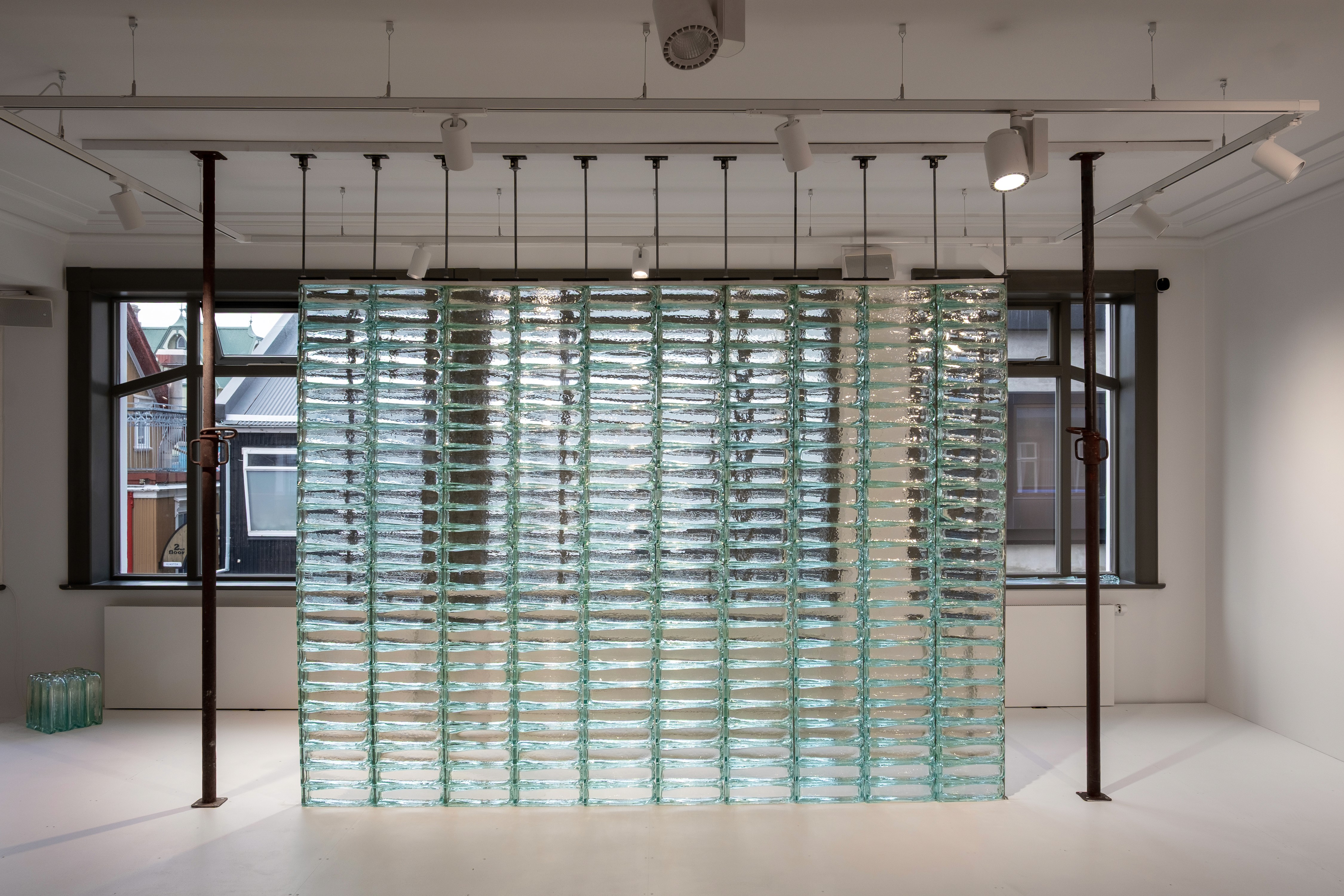
The Circular Wall is an experimental interior wall system developed from recycled glass and steel. Based on circular design principles, it is constructed from pure, reusable materials and assembled without permanent bonding, enabling disassembly, adaptation, and full material recovery with significantly reduced carbon impact.
Location
Reykjavík, Iceland
Status
Ongoing
Typology
Interior
Interior
Size
Flexible
Year
2022
Client
Research project
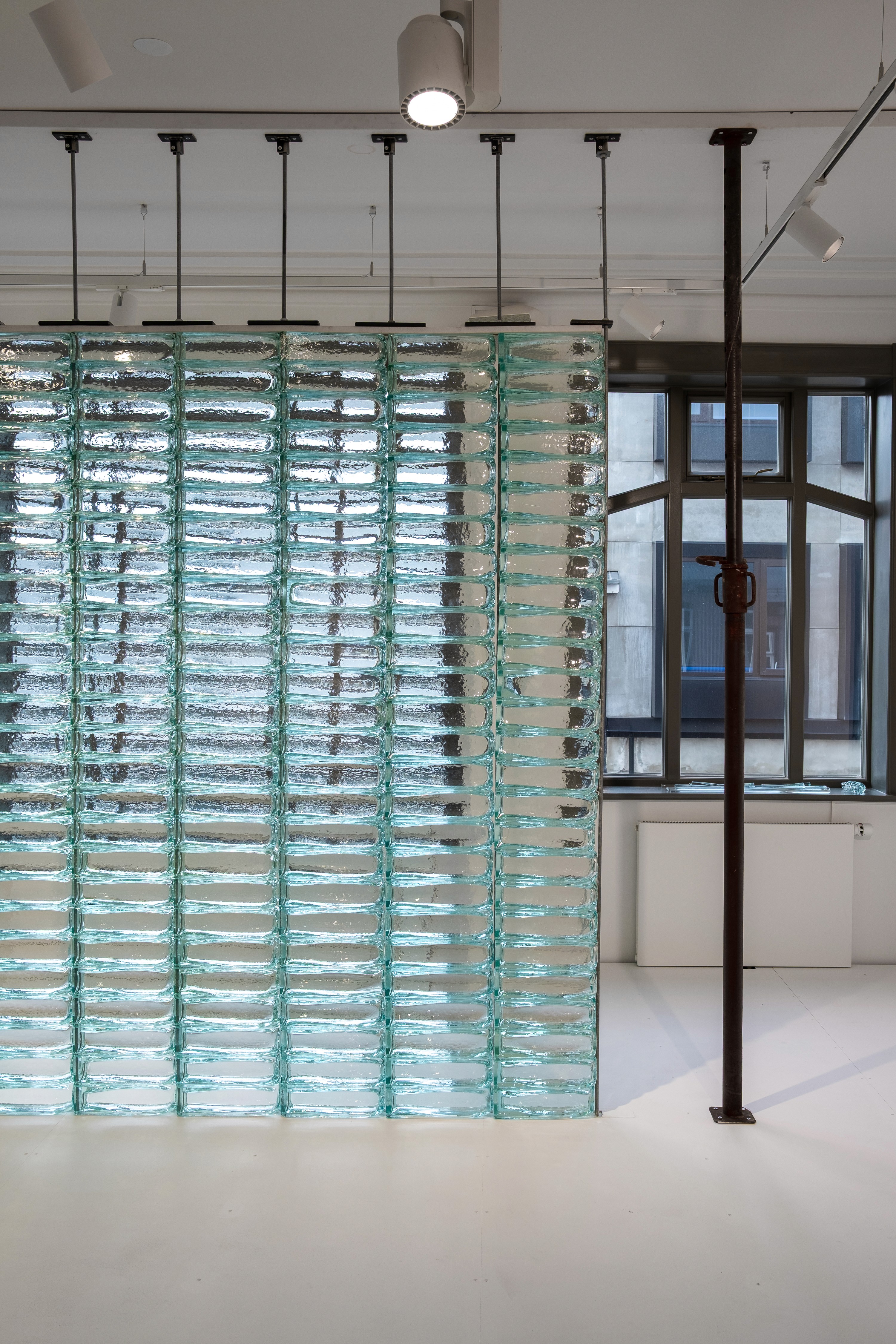
The Circular Wall is a research-driven collaboration between Basalt Architects, Reykjavík Glass, EFLA, and Jáverk. It explores how architectural elements can be reimagined through circular principles, challenging conventional approaches to materials, construction, and lifecycle.
The design began with mapping local waste streams rather than predefined products. Discarded float glass was identified as a key resource and became the basis for developing an interior wall system that expresses both material origin and process.
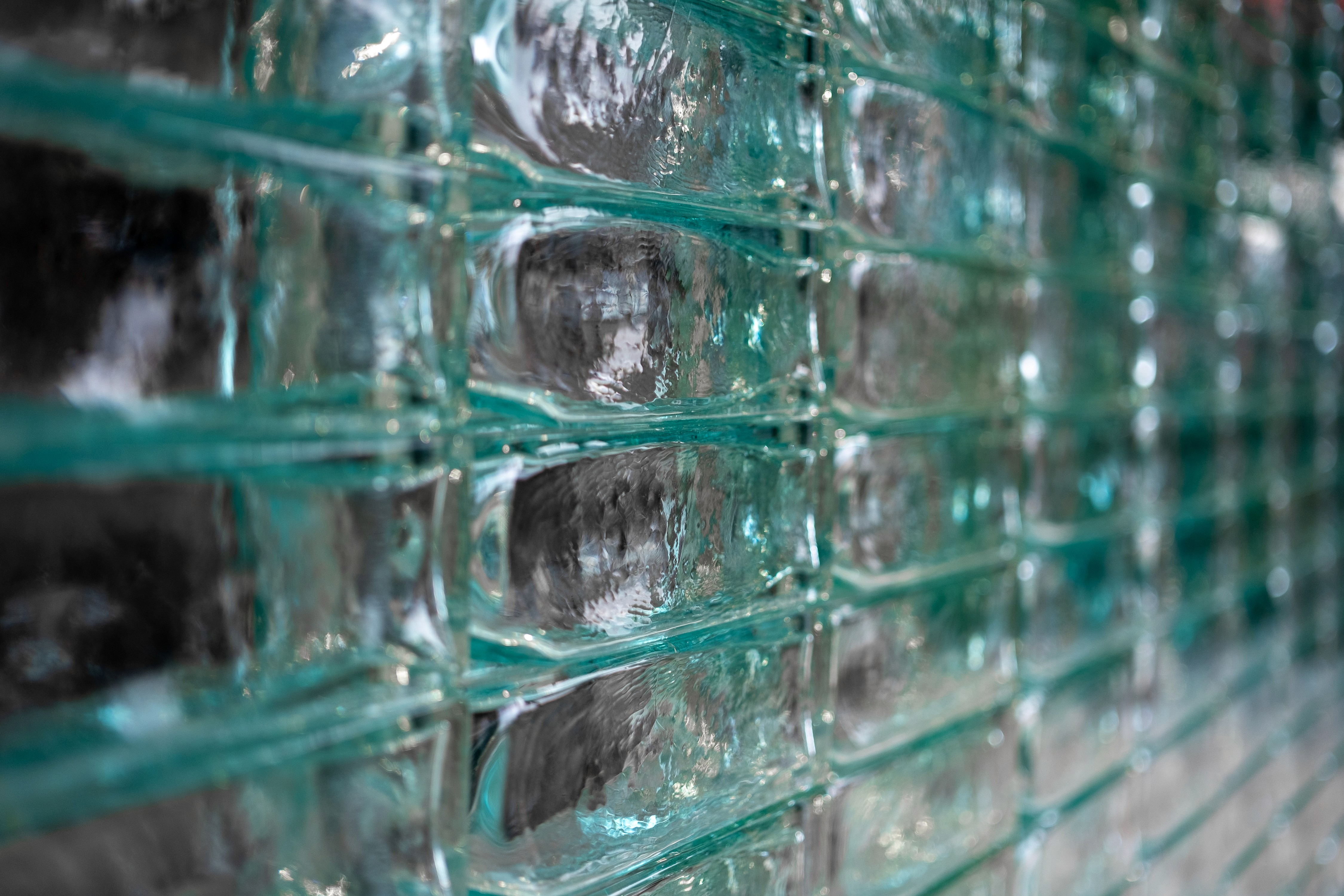
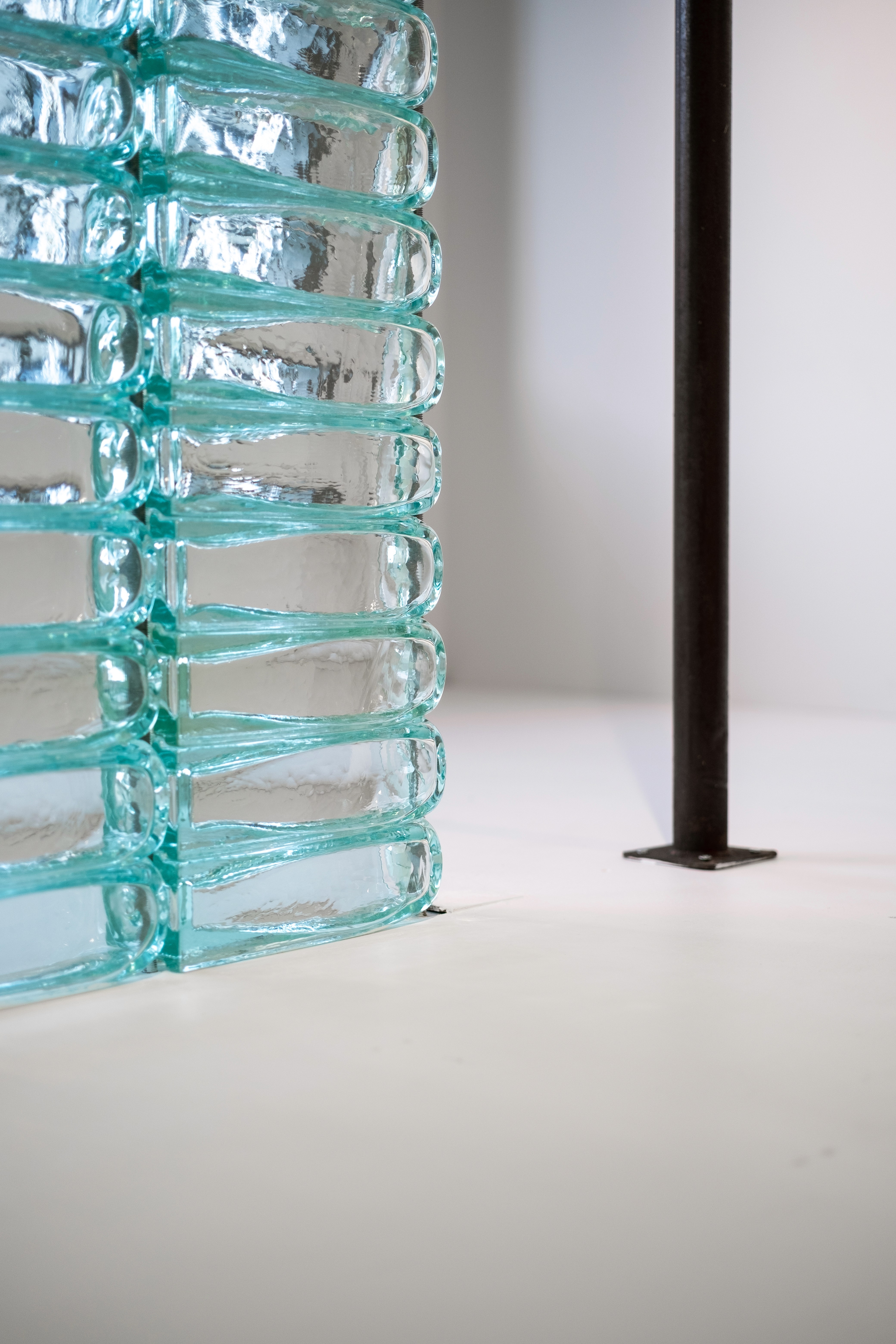
The wall is composed of hand-blown glass blocks made from recycled glass. Produced using renewable energy and reusable moulds, each block varies subtly in size, thickness, and transparency, giving the wall a tactile and distinctive character.
The Circular Wall is a research-driven collaboration between Basalt Architects, Reykjavík Glass, EFLA, and Jáverk. It explores how architectural elements can be reimagined through circular principles, challenging conventional approaches to materials, construction, and lifecycle.
The design began with mapping local waste streams rather than predefined products. Discarded float glass was identified as a key resource and became the basis for developing an interior wall system that expresses both material origin and process.
The wall is composed of hand-blown glass blocks made from recycled glass. Produced using renewable energy and reusable moulds, each block varies subtly in size, thickness, and transparency, giving the wall a tactile and distinctive character.
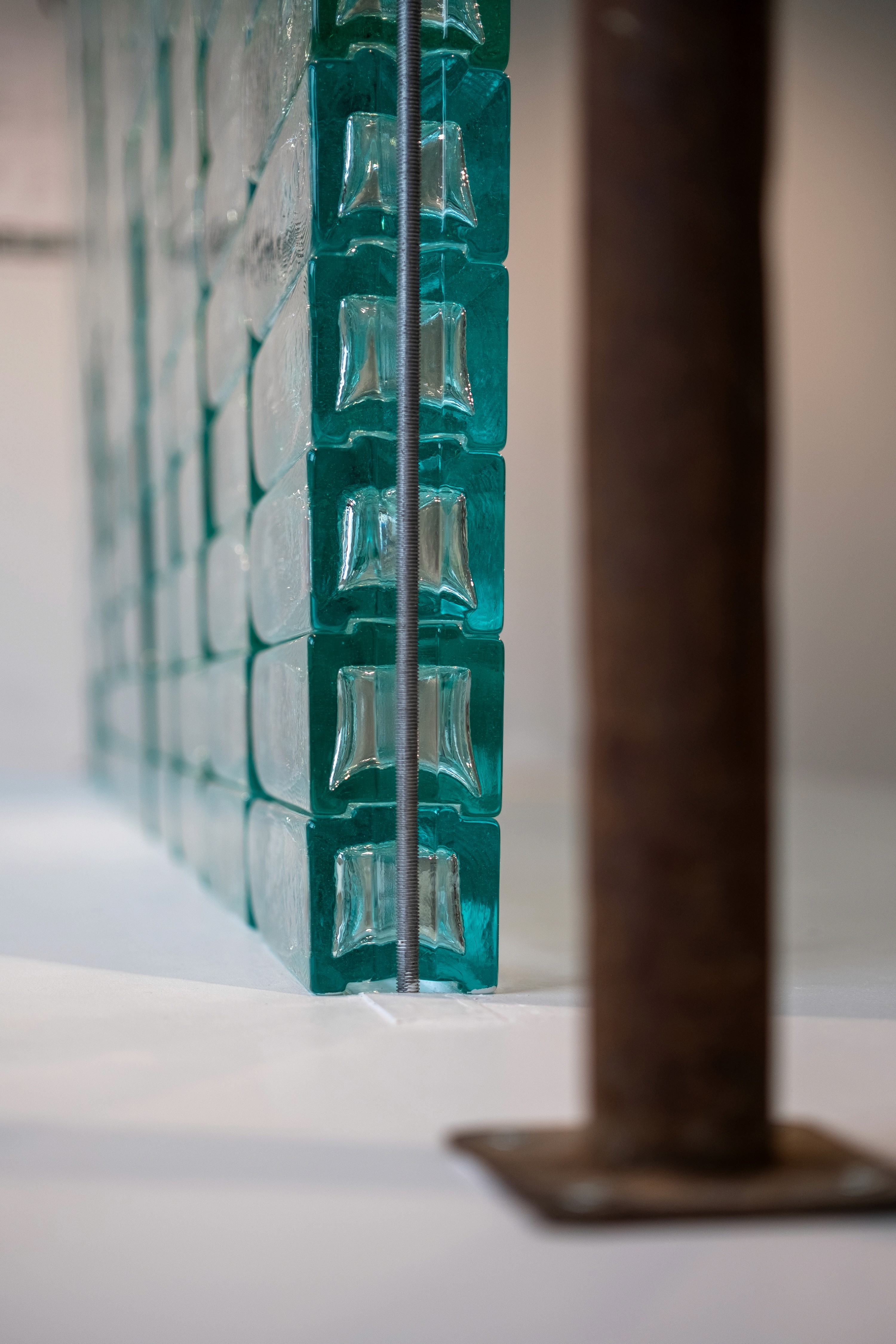
A core principle is the use of pure, separable materials. The system consists only of glass and steel, avoiding composites and adhesives. This allows all components to be disassembled, reused, or fully recycled without loss of quality.
Structurally, the wall relies on compression. Glass blocks are stacked between vertical steel rods fixed between floor and ceiling and mechanically tensioned to stabilize the system. The dry assembly enables easy disassembly, reconfiguration, or relocation without generating waste.
The Circular Wall demonstrates how local waste materials can be redirected into architectural applications. As an evolving prototype, it proposes a flexible, reversible system where materials remain in circulation and architectural elements are understood as adaptable rather than permanent.
A core principle is the use of pure, separable materials. The system consists only of glass and steel, avoiding composites and adhesives. This allows all components to be disassembled, reused, or fully recycled without loss of quality.
Structurally, the wall relies on compression. Glass blocks are stacked between vertical steel rods fixed between floor and ceiling and mechanically tensioned to stabilize the system. The dry assembly enables easy disassembly, reconfiguration, or relocation without generating waste.
The Circular Wall demonstrates how local waste materials can be redirected into architectural applications. As an evolving prototype, it proposes a flexible, reversible system where materials remain in circulation and architectural elements are understood as adaptable rather than permanent.
Credits
© 2026 Basalt Architects
© 2026 Basalt Architects
© 2026 Basalt Architects
© 2026 Basalt Architects